What is an ECU remap?

What is an ECU remap? A complete beginner's explanation (2025 update)
If you're just getting into the world of chiptuning, one of the first things you hear is “ECU remap”. What exactly does it mean, is it safe and what is actually done to your car? In this 2025 beginner's guide we explain, step by step, what a remap is, how it works and what you can expect when you bring your car to the ASF Tuning dyno centre.
The goal is for you to understand what changes, why it changes and what the real benefits are, instead of just believing stories from the internet.
What is an ECU anyway?
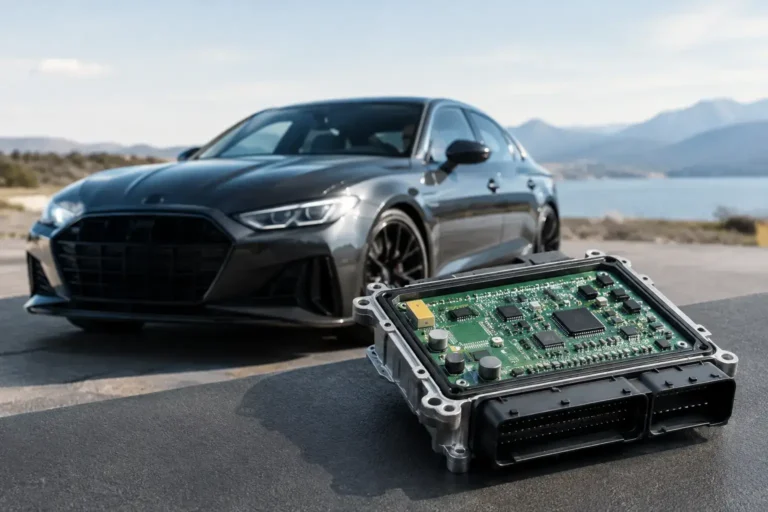
The ECU (Engine Control Unit) is the engine's electronic brain. It's a computer that collects information through sensors (temperature, pressure, throttle position, revs, airflow...) and based on it controls the engine's main operating parameters: fuel quantity, ignition, turbo boost, EGR/DPF system operation and much more.
Put simply: the ECU decides how much power the engine will give and how it will behave in different driving conditions. You can also read more about the ECU itself here: engine control unit (ECU).
What is an ECU remap?
The factory loads the ECU with software (maps) set up for the average user, different fuels, climates and legal limits. That means the engine almost never runs at its full potential.
An ECU remap is the process of changing that factory software – precisely correcting the fuel, turbo boost, torque, torque limit, throttle response maps and more – to get:
- more power and torque,
- better throttle response,
- more flexibility on the road,
- and in many cases lower consumption in normal driving.
It's all done in software – no drilling, cutting, chips or “boxes”. A well-done ECU remap can't be seen from the outside at all, but you can definitely feel it behind the wheel.
What exactly changes during a remap?
Every engine and ECU has dozens of maps that define how the engine behaves. In a professional remap not all maps are touched, only the key ones for power, torque and drivability. Some of the most important are:
- Fuel injection map – injection quantity and timing.
- Ignition map (on petrol engines) – ignition timing for optimal power without knock.
- Turbo boost map – how much boost the turbo makes and in which range.
- Torque limits – how much torque the ECU “allows” the engine and gearbox.
- Throttle map – how the pedal responds (faster, more linear, sportier).
- Protection maps – temperatures, pressures, limp mode thresholds (these must not be switched off).
With a serious tuner the goal isn't to “turn everything up to the max”, but to find the balance between power, durability and engine safety.
How much power can I expect from a remap?
The power gain depends on several factors: engine type (petrol/diesel), whether it's turbo or naturally aspirated, the original factory power, engine condition, fuel and so on. In short:
- Turbo diesel engines – the most rewarding for a remap; the power increase is often +25–35%, and torque even more.
- Turbo petrol engines – respond very well to a remap; a gain of +20–30% while keeping factory reliability.
- Naturally aspirated engines – the gain is usually smaller, +5–10%, but throttle response and flexibility improve significantly.
For the detailed difference between tuning levels, also see our guide Stage 1 vs Stage 2 – what's the difference?
Is an ECU remap safe for the engine?
The most common question we hear is: “Will a remap destroy my engine?”. The answer is: a well-done remap, on a healthy engine, within safe limits – no.
The problem arises when:
- “universal” files downloaded from the internet are used,
- the tuner works without dyno checks and logs,
- the protections and limits set by the factory are switched off,
- more is asked of the car than the turbo, injectors or clutch can handle.
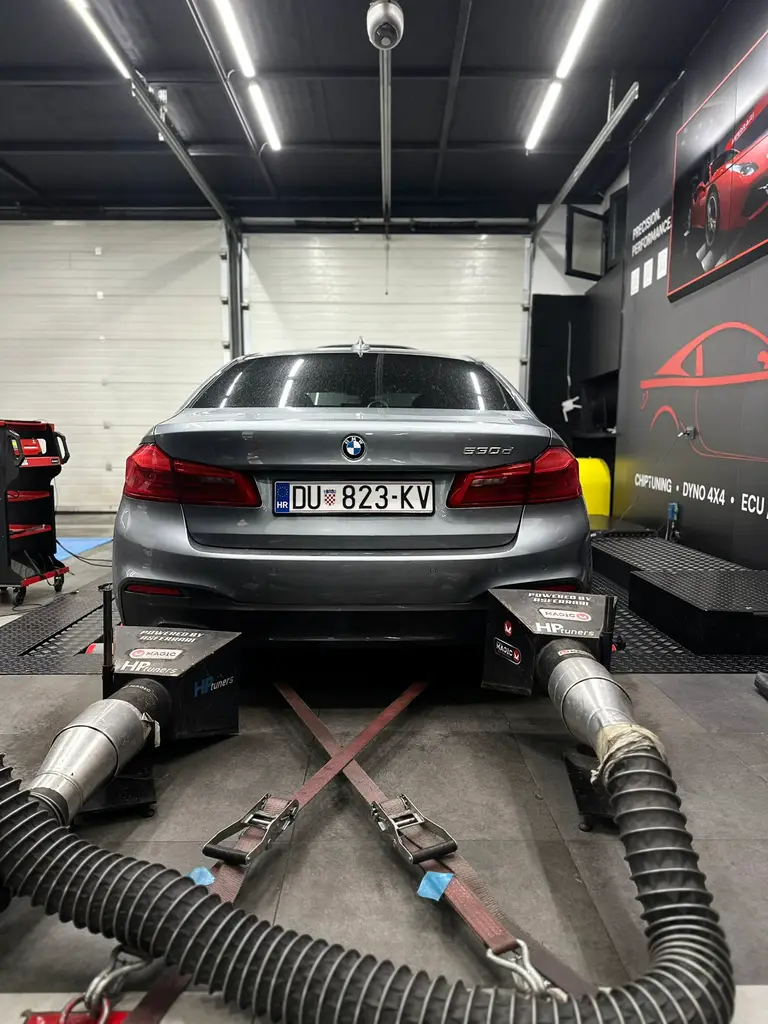
U ASF Tuning we do the remap based on your ECU's original file, with dyno measurement and logs in real driving. That means the maps are adapted to your specific car, not some “similar” one.
What does the remap process look like at ASF Tuning?
-
Diagnostics and vehicle inspection
We check faults, engine operation, DPF/EGR condition, leaks, smoke, temperature and so on. If something isn't right – the remap isn't done until the fault is fixed. -
Reading the original file
Via OBD or directly on the bench (bench/boot) we read the ECU's contents and make a backup copy (backup). -
Building the maps
In software such as WinOLS, Dimsport,ECM,StageX... we analyse the maps and adapt them to the car's condition and the desired tuning level (Stage 1, Stage 2 etc.). -
Writing (flashing) and dyno test
The new software is written to the ECU, followed by measurement on the 4×4 dyno and logs to confirm that pressures, AFR and temperatures are within limits. -
Test drive and final check
We do a test drive in real conditions, listen to the driver's impressions and fine-tune the maps if needed (throttle response, torque delivery, kickdown on automatics etc.).
Benefits of an ECU remap in everyday driving
- Much stronger in-gear acceleration – overtaking becomes shorter and safer.
- Better flexibility – the car is no longer “dead” at lower revs.
- Fewer gear changes – especially on diesels with an automatic.
- Possibly lower consumption in relaxed driving, because the engine pulls more easily.
- Adapted to your driving style – it makes a difference whether you want a “daily” or maximum performance.
When maybe not to do a remap?
Although tuning is our business, there are situations where we honestly advise postponing the remap:
- the car has visible mechanical problems (smoke, knocking, faults, irregular running),
- the DPF is almost completely clogged,
- the gearbox slips or jerks,
- the fuel used is of very poor quality.
In those cases we first do servicing and repairs, and only then the remap. Tuning mustn't be a “plaster” for a mechanical problem.
Frequently asked questions about ECU remapping
Can a remap be reversed back to factory settings?
Yes. We always keep the original file of your ECU. If for any reason you want to go back to factory settings, a so-called “stock flash” can be done.
Does a remap affect the warranty?
Manufacturers don't officially approve tuning, so a remap can formally affect the warranty. Still, with a professionally done remap, most dealers notice nothing at regular services.
Can every car be remapped?
Most modern turbodiesel and turbo petrol engines can, but there are exceptions (very old models, very new locked ECUs, exotic vehicles...). The easiest thing is to send us the VIN or a photo of the registration document and we'll check.
How long does a remap take?
A standard Stage 1 remap with diagnostics and dyno measurement usually takes between 2 and 4 hours, depending on whether the ECU is read via OBD or on the bench.
Ready for your first ECU remap?
If you want a proven, safe and dyno-tested remap for your car, send us an enquiry or book an appointment:
- Dyno remap at the ASF Tuning centre – 4×4 measurement, logs and custom mapping.
- Online file service for tuners – send the original file via the ASF File Service portal.
Click the contact form on the website or message us directly on WhatsApp at +382 6789 8619 and you'll get a recommendation of which option is best for your car (Stage 1, Stage 2, TCU tuning and more).
Below you'll find useful links related to ECU remapping, tuning processes and additional technical information.
🔗 Internal links
- Stage 1 vs Stage 2 – explanation and difference
- ASF Motorsport – professional tuning & dyno services
- ASF File Service – online ECU/TCU remap files
🌍 External links
🚀 Want a professional and safe ECU remap?
Contact ASF Motorsport and book an appointment:
📞 +382 69609609
📩 Instagram: @asftuning
🌐 asftuning.com/tuning