When to use a custom map for the engine and gearbox
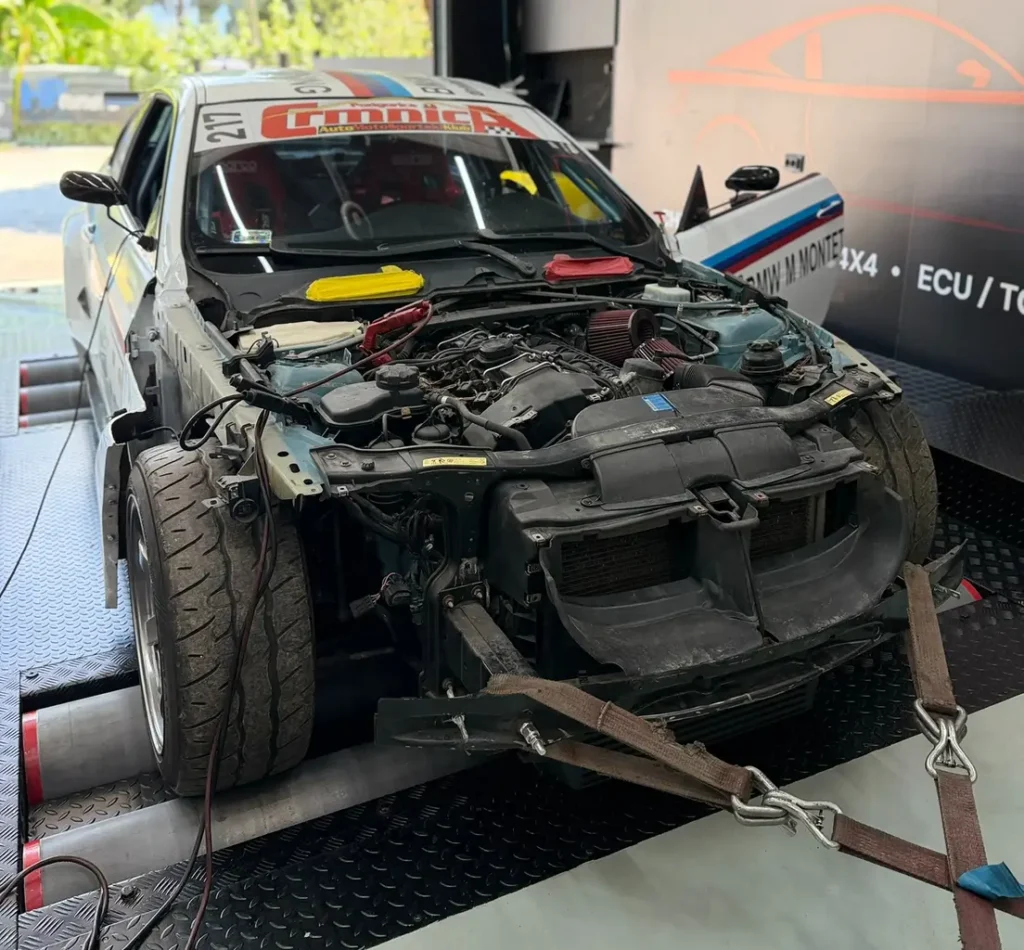
A stock engine map has to work equally reliably in different climates, with different fuel quality and for thousands of vehicles that won't necessarily be maintained perfectly. That's why it's always a compromise. The question of when to use a custom map comes up when that compromise no longer fits the real condition and purpose of your vehicle – especially after mechanical modifications, for specific working use, or when you want precisely defined response without guesswork.
A custom map isn't just a “stronger” version of the existing software. It's an individually built ECU or TCU calibration, based on diagnostics, the vehicle's technical condition, fitted components and data collected during measurement. The goal isn't the biggest number on paper, but a matched system that delivers power, torque and drivability within the safe limits of the drivetrain.
When to use a custom map instead of an off-the-shelf calibration
A ready-made, proven calibration can make sense for a completely stock vehicle that's in good technical condition and used in predictable conditions. It's based on a configuration already tested on the same engine and ECU type. However, as soon as the vehicle departs from that configuration, the value of an individual calibration rises significantly.
The clearest case is mechanical modifications. A bigger turbo, different intake, modified exhaust, larger intercooler, fuel system, camshafts or changes on a motorcycle directly alter the amount of air, fuel and heat load the engine can handle. A map that was fine before the modification may not properly control boost pressure, fuel quantity, ignition angle or torque limiters after it.
The same goes for vehicles working under special load. A pickup that often tows a trailer, a delivery van carrying cargo every day, a tractor in seasonal work or a boat running at high load for long periods don't have the same needs as a passenger car in city traffic. For them, the calibration isn't judged by peak power alone. Stable torque in the useful range, temperature control and protection of the gearbox, clutch or drivetrain components matter more.
The third reason is fuel. Not all pumps, regions and markets are equal in fuel quality and consistency. If a vehicle regularly runs on a particular fuel, a custom map can be tuned to its real characteristics. That doesn't mean aggressively pushing limits, but properly setting margins for knock, intake temperature and long-term reliability.
What is actually adjusted in a custom map
Modern ECU calibration isn't a single table that's simply raised or lowered. Depending on the engine and control unit, the tuner works with a range of interlinked models: driver demand, torque limiters, turbo boost, fuelling, ignition angle, temperature control, lambda targets and protection strategies.
On turbo engines it's especially important that requested torque, airflow and boost pressure are matched to each other. If only the target boost is raised without proper control of the other parameters, the result can be unstable power delivery, excessive exhaust gas temperature or intervention by protection systems. A well-made custom map therefore builds power gradually and predictably, instead of creating a short peak that stresses components.
On naturally aspirated engines the approach is different. The gain is often not dramatic, but throttle response, fuel corrections and ignition can be adapted to the specific modifications and fuel. On motorcycles special attention is paid to the transitions as the throttle opens, because the rider feels those changes directly through the grip and the rear wheel.
TCU calibration plays an equally important role when an automatic or dual-clutch gearbox handles increased torque. Clutch pressure, shift strategy, torque limiters and communication between the ECU and TCU must stay matched. An engine map without a suitable TCU strategy can leave the vehicle slow to shift, torque-limited or exposed to unnecessary clutch slip.
Dyno measurement gives data, not assumptions
Custom work without measurement often relies on assumptions. A dyno test allows controlled monitoring of power, torque and vehicle behaviour across the whole rev range. More importantly, it allows the same load to be repeated while relevant parameters from the ECU and additional measuring systems are monitored.
On an AWD chassis dyno, all-wheel-drive vehicles can be tested without compromising how the drive system works. For motorcycles, a hub dyno gives stable and repeatable results without the effect of tyre slip on a roller. In practice, the number on the chart is useful, but the curve reveals much more: where the engine makes its torque, whether delivery stays linear and how the vehicle behaves at full load.
ASF Motorsport uses diagnostics and dyno testing as part of the calibration process, because every change must be confirmed by real data. If the logs show temperature outside the desired range, ignition corrections or a pressure deviation, the calibration is adjusted. That's the difference between tuning based on measurement and a generic file applied without checks.
When a custom map isn't the right first step
Not every vehicle is ready for tuning. Sensor faults, worn spark plugs, fuel delivery problems, intake leaks, a weak turbo, faulty injectors or a slipping clutch aren't solved by a new map. Calibration can even make an existing problem more visible because the vehicle works under higher load.
That's why inspection and diagnostics come before any software change. You need to check fault codes, actual pressure values, coolant and intake temperature, fuel corrections, the condition of the ignition system and, where relevant, how the gearbox works. For older and high-mileage vehicles the decision depends on the actual condition, not just the model and year.
A custom map also isn't justified if the owner has no clearly defined goal. If the vehicle is driven only on public roads and is completely stock, a proven conservative calibration may be the more sensible choice. Individual work is most valuable when there's a concrete reason: a modified hardware configuration, demanding working use, a specific fuel, the need to optimise the TCU or the need to confirm the vehicle's behaviour on the dyno.
What a responsible build process looks like
The process starts with a conversation about the vehicle and its purpose. It's important to know which components are fitted, how the vehicle is used, what fuel is available and whether there were previous problems. That's followed by reading the original software and detailed diagnostics.
A baseline measurement is useful because it creates a reference. Without it, it's hard to judge the change objectively, especially on vehicles that have already had software work. Then the calibration is built or adapted, tested under load and monitored through logs. Several iterations are done if needed, because ideal values aren't set by assumption but by the response of the specific engine.
The final part of the job isn't just a peak run on the dyno. Cold and warm running, part-throttle response, load transitions, protection functions and gearbox behaviour are all checked. A vehicle that looks strong at the top of the chart but jerks in everyday driving, overheats or constantly triggers protection is not well calibrated.
The real question isn't how much can be changed in the software, but what the vehicle actually needs to run better and with more control. When the mechanical configuration, diagnostics and measurements are clear, a custom map becomes a precise engineering tool – the place where speed truly meets precision.