A guide to truck tuning for power and efficiency

A truck that struggles to hold speed under load, changes gear too often or uses more fuel than the job justifies isn't a candidate for a random software change. A guide to truck tuning starts with assessing the real working task: routes, payload, drive configuration, altitude, driving style and vehicle condition. Only then can ECU and TCU calibration become a precise tool for better response, more usable torque and controlled drivetrain operation.
For a commercial vehicle the goal should rarely be just the highest power figure. What matters more is how the engine builds torque in the rev range the truck uses every day and how the gearbox transfers that torque. Well-executed tuning doesn't change the vehicle's mechanical limits. It adjusts the control strategies within reasonable limits, respecting temperature, pressure, protection functions and the truck's purpose.
What truck tuning really changes
Modern diesel trucks use the ECU to control injection, boost pressure, air quantity, torque limiting and numerous protection strategies. The TCU, when the vehicle has an automatic or automated gearbox, controls gear changes, torque reduction requests during shifts and the permitted load on the clutch or torque converter.
An ECU remap can improve throttle response and deliver more usable torque in the mid-range. That's the range the driver feels when exiting a slower corner, joining an uphill road or keeping pace with a load. However, extra torque must be matched to the capacity of the clutch, gearbox, propshaft, differential and cooling system. A calibration that ignores that chain may seem impressive in the short term, but in the long term increase wear and downtime in the fleet.
TCU calibration makes sense when the factory gearbox logic changes gear too early, hunts unnecessarily between two gears or doesn't make good enough use of the engine's available torque. Properly adjusting shift points can reduce interruptions in pull and make driving more predictable. Still, the TCU isn't tuned in isolation. Its torque limits, clutch protection and communication with the ECU must stay aligned.
Power isn't the same as working ability
On a truck, a broad and stable torque curve is often more useful than a sudden power peak. Too aggressive a torque rise at low revs can stress the drivetrain before the vehicle gets moving. On the other hand, carefully shaped torque delivery lets the driver continue uphill earlier and more smoothly, with less need for sudden gear changes.
Fuel consumption also depends on conditions. If the calibration helps the engine stay longer in its efficient range and reduces unnecessary shifting, consumption can improve. But heavier loads, more frequent full-throttle use, low tyre pressure or short-distance driving can cancel out that advantage. A professional approach doesn't promise the same result for every truck and every route.
Before tuning: diagnostics decide much more than the file
Before any software change, the vehicle's technical condition must be checked. A boost-related fault, a worn sensor, a fuel delivery problem or restricted regeneration of the exhaust aftertreatment system aren't solved by a remap. Tuning a vehicle that already has an active fault can mask the symptoms, but doesn't remove the cause.
Diagnostics should include reading fault codes, reviewing real values during operation and checking deviations between requested and measured parameters. Particular attention is paid to temperatures, boost pressure, the fuel system, intake condition, turbo operation and gearbox parameters. On higher-mileage trucks, the clutch condition and drivetrain behaviour under load should also be assessed.
The service history is as valuable as the diagnostic record. A truck that regularly pulls maximum weights, works in mountainous areas or does a lot of idling needs a different approach from a vehicle doing regional distribution. That's why it's useful to state in advance the real weight the vehicle most often carries, the trailer type and the usual routes.
Why dyno measurement matters
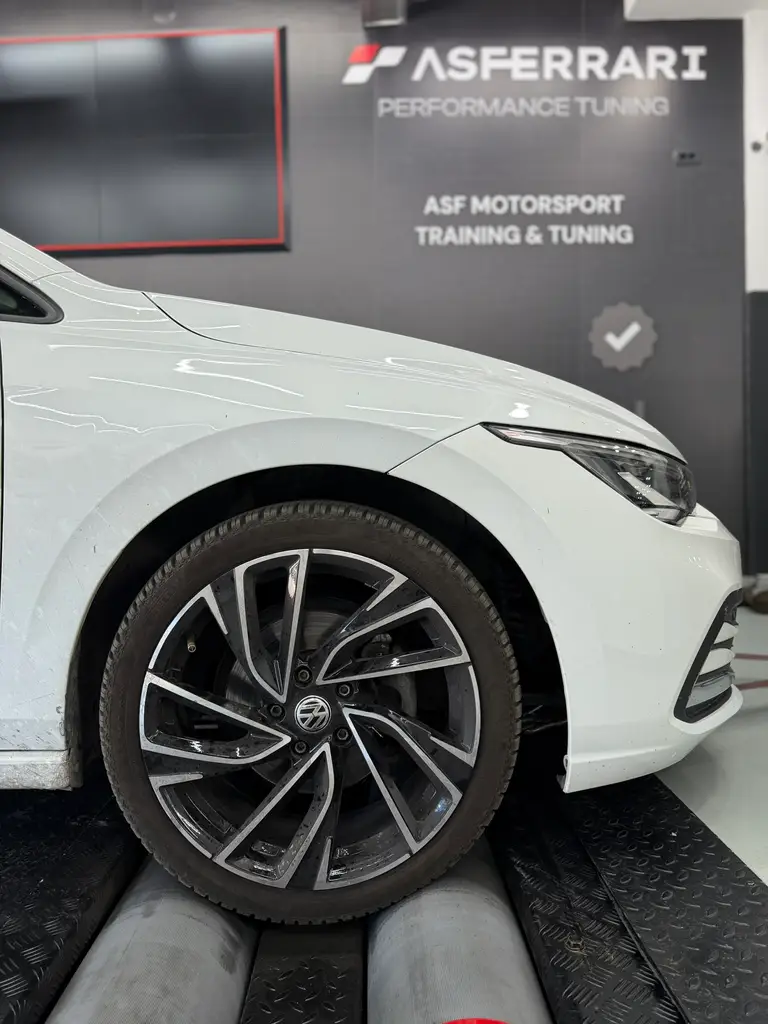
A dyno isn't just for showing peak power. On trucks, its value lies in controlled measurement of torque development, engine behaviour across the rev range and comparison before and after calibration. It gives data that allows a change to be verified, not assumed.
Measurement before tuning can reveal that the vehicle is already not delivering the expected performance because of a technical problem. In that case the right decision isn't a more aggressive map, but fixing the fault and retesting. After calibration, measurement shows whether the torque curve is progressive and whether the result meets the defined goal.
For fleet operators, data from real-world operation is also useful. Consumption per route, travel time, frequency of gear changes and drivers' feedback can show whether the calibration brings an operational benefit. One measurement gives the technical basis, while working days give confirmation in practice.
Safety limits and legal responsibility
Quality tuning keeps factory protections active where they protect the engine and drivetrain. Temperature corrections, torque limits in certain conditions and protection strategies aren't obstacles to remove, but part of the vehicle's design safety. Trying to make a vehicle more powerful by ignoring these systems isn't professional calibration.
Emissions control systems must remain functional in line with the regulations for the vehicle and the market where it's used. Improper changes can lead to failures, problems at roadworthiness inspections, higher operating costs and liability for the owner. For vehicles under warranty, the manufacturer's terms should also be checked before any intervention in the control software.
The driver also remains a key part of the result. Better response doesn't justify higher speeds or more aggressive manoeuvres with a loaded vehicle. The best calibration is the one that makes controlled work easier, not one that encourages unnecessary risk.
How to choose the approach for a particular truck
The right question for the tuner isn't “how much can it do?”, but “what does the truck need to do better?”. For a tractor unit that regularly works on climbs, the priority may be more stable torque in the working range. For a distribution vehicle with many stops, pull-away response and automatic gearbox logic may matter more. With special bodies such as refrigerated units, tippers or vehicles with hydraulic drives, the extra loads must be part of the assessment.
Ask for a clear technical conversation before the work: what's checked, what the calibration goals are, how the original software is saved and how the result is confirmed. ASF Motorsport approaches such projects through diagnostics, measurement and a tailored ECU/TCU calibration, because the same factory engine code doesn't necessarily mean the same working reality.
A good truck tuning decision doesn't start with wanting a bigger number, but with understanding the work the vehicle carries. When data, vehicle condition and calibration are aligned, the result can be a truck that works more decisively, predictably and economically – exactly where speed meets precision.