How to optimise a diesel map without risk

On a modern turbodiesel, extra power doesn't come from one change in the file. The question of how to optimise a diesel map is really the question of how to align fuel, air, turbo boost, temperature limits and the engine's protection strategies without compromising reliability. A good calibration isn't recognised only by a bigger number on the chart, but by linear response, clean running and performance the engine can repeat under load.
A diesel engine has strong potential for increasing torque, especially when the turbo is correctly sized and the injection system and drivetrain are in good condition. Still, the same torque that makes a vehicle more flexible can stress the clutch, flywheel, automatic gearbox, differential and driveshafts. That's why a map isn't optimised to a universal recipe. The calibration must suit the specific engine, its mileage, the vehicle's purpose and its real technical condition.
How to optimise a diesel map: start with diagnostics
Before any ECU calibration change, you need to establish whether the engine is working as the manufacturer intended. Tuning doesn't fix mechanical or electrical faults. On the contrary, extra load can reveal them sooner.
Quality diagnostics include reading fault codes, checking actual and requested values of boost pressure, rail pressure, air mass, intake and cooling system temperatures, and injection corrections. On higher-mileage vehicles, the condition of the turbo, vacuum control, intake system, intercooler hoses, DPF system, EGR system and fuel components is especially important.
If the data log shows the turbo isn't reaching target boost or the injectors have pronounced corrections, the right order is repair, then calibration. The same goes for clutch slip or irregular automatic gearbox operation. A map can be technically precise, but it can't make up for a component at the end of its life.
A stock measurement gives the real starting point
The manufacturer's claimed power isn't always the power the vehicle delivers today. Differences can come from engine condition, fuel, ambient temperature, altitude and deviations in individual components. That's why measuring on a dyno before changing the map gives a valuable starting picture.
An AWD dyno allows controlled loading and measurement of all-wheel-drive vehicles, while logging parameters during the run shows how the engine behaves when really working under load. The power chart is useful, but the relationship between power and torque, boost stability and exhaust gas temperature often say more about the quality of the tune.
What really changes in a diesel map
A diesel ECU map consists of a large number of interlinked calibrations. Changing just one value without understanding the other limiters can result in poor response, too much smoke, excessive temperatures or uneven torque.
The most important part is controlling injection quantity and timing. More fuel can produce more torque only if the engine gets enough air for combustion to stay efficient. That's why torque request, smoke limiters, turbo boost, turbo geometry control and, where justified, fuel pressure are adjusted. All changes must stay within limits that protect the turbo, pistons, injection system and exhaust system.
Injection timing needs special attention. Late injection can unnecessarily raise exhaust gas temperature and reduce efficiency, while aggressively advancing it can create undesirable loads and rougher running. There's no universal value that suits every 2.0 TDI, 3.0 dCi, HDi, JTD or other diesel engine. The ECU software version, turbo, injectors and factory protection strategy determine the safe approach.
Turbo boost also isn't a number to raise without restraint. Higher boost doesn't automatically mean a better result. If the turbo leaves its efficient operating range, air and exhaust gas temperatures rise and the real gain may be small. A well-tuned map follows requested and actual boost, allows progressive power build-up and avoids sudden torque spikes at low revs.
Torque must match the drivetrain
With a manual gearbox, the biggest limit is often not the engine, but the clutch and dual-mass flywheel. Too much torque at low revs can cause slip, vibration or accelerated wear. In that case it's more sensible to shape the torque curve so that power comes in gradually, instead of forcing the maximum value as soon as the turbo starts to spool.
Automatic and DSG gearboxes need even more precise alignment. The TCU uses the calculated engine torque to control clutch pressure, gear selection and shift strategy. If the ECU reports values that don't match the real torque, the gearbox can respond with limp mode, hesitant shifts or clutch plate slip.
That's why an ECU and TCU calibration on certain vehicles should be treated as one whole. The goal isn't harder shifts at any cost, but stable torque transfer, logical behaviour under acceleration and preservation of the gearbox's protection functions.
Why testing after the change determines quality
After programming, it isn't enough to take a short test drive and declare the job done. The vehicle should be tested under controlled load and real values monitored. Boost, air mass, fuel pressure, injection corrections, temperatures and delivered torque are compared. If a deviation appears, the calibration is corrected based on data, not assumption.
This process is especially important for vehicles that tow trailers, vans and light commercial vehicles, as well as tractors, work machines and boats. Their engines often run under high load for long periods, where a short burst of power has no value if temperatures and pressures aren't stable. In such applications a wider usable torque range and better response at working revs are often more important than peak power.
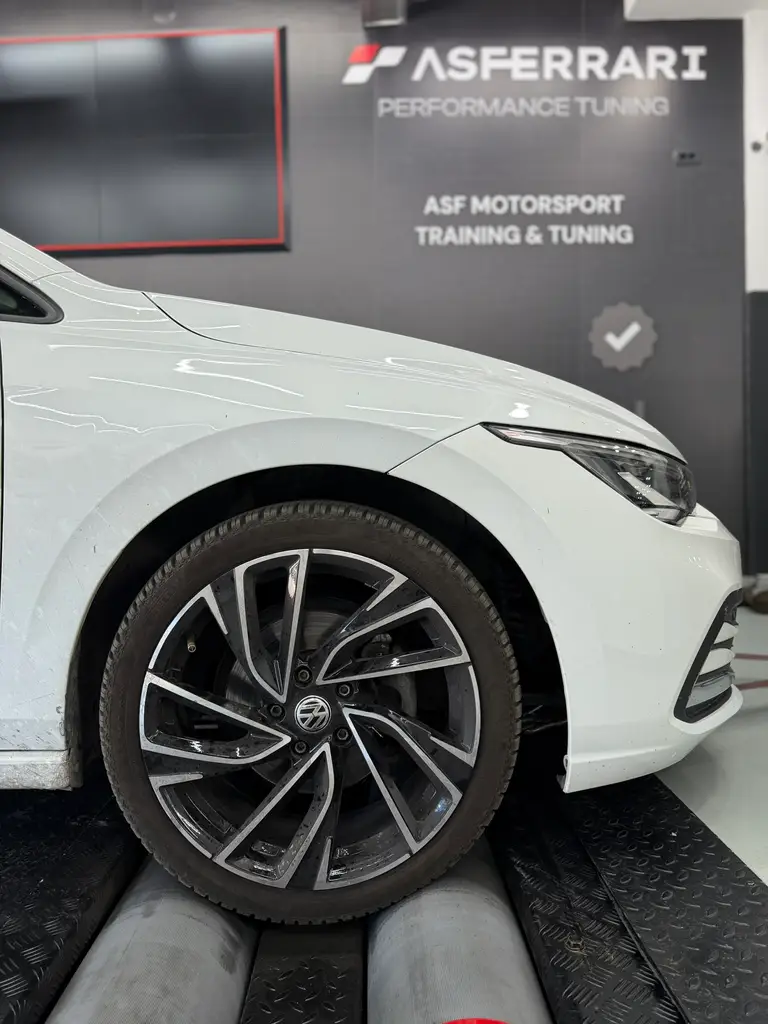
ASF Motorsport approaches calibration through diagnostics, measurement and checks under load, because that's the only way to tie performance to real data. That's the Where Speed Meets Precision principle: power with technical backing, not just an attractive number.
Fuel consumption, emissions and realistic expectations
An optimised diesel map can reduce fuel consumption in certain conditions. The reason isn't magic, but more available torque with less pressure on the accelerator and the possibility of shifting up earlier. However, it depends on driving style, load, route and how the extra power is used. If the vehicle is driven more aggressively, consumption will logically rise.
Just as importantly, a professional calibration shouldn't remove or bypass emissions control systems on road vehicles. The DPF, EGR, SCR and sensors have a role in the engine's factory strategy. When there's a fault or blockage, the cause should be properly diagnosed and fixed, in line with applicable regulations.
A good decision on diesel map optimisation starts with an honest assessment: what you expect from the vehicle, what condition it's in and how much load the drivetrain can handle. When the answers are based on measurement and data, the result isn't just a faster vehicle, but one that works more strongly and predictably when you really need it.