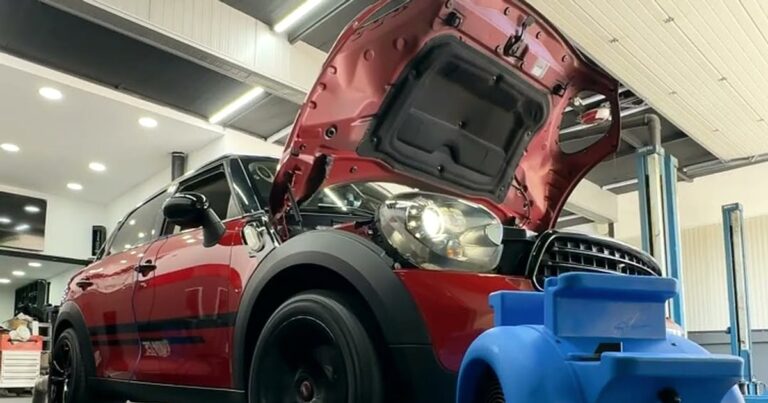
Why an engine loses power and how to find the cause
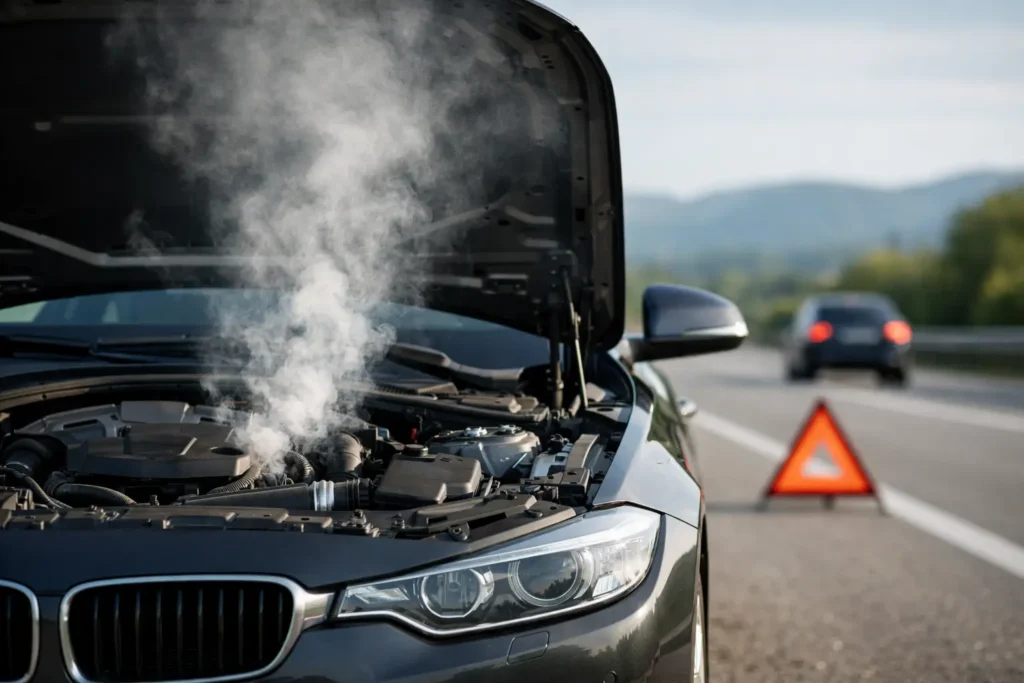
A loss of power often doesn't appear as a complete failure. The vehicle still starts, idles and can be driven normally, but when overtaking, climbing or under load it no longer responds as before. The question of why an engine loses power has no single universal answer: the cause can be in the air, fuel, electronics, exhaust, engine mechanics or even the drivetrain.
The most important thing is not to guess. Modern petrol and diesel engines don't run on one sensor or one map in the ECU. They constantly compare requested torque, air mass, boost, temperature, fuel pressure and many other parameters. When a signal deviates from what's expected, the ECU can limit power to protect the engine, turbo, catalytic converter, DPF or gearbox.
Why an engine loses power under load
If the engine runs fine in light driving and power only disappears at full throttle, uphill or under heavier load, diagnostics should start with the systems that are under the greatest demand at that point. For power the engine needs a precise air-fuel ratio, stable ignition on petrol engines, the right boost on turbo applications and free exhaust flow.
On a naturally aspirated engine, the problem is often felt gradually. The vehicle becomes more sluggish, consumption may rise and throttle response becomes less direct. On a turbo engine the loss of power can be more pronounced: the turbo doesn't build the expected boost, the vehicle doesn't pull in the mid-range or the ECU activates limp mode.
Limp mode isn't a diagnosis but a consequence. It tells you the control unit has recognised a condition in which it doesn't want to allow full torque. Switching the vehicle off and on again sometimes temporarily restores power, but it doesn't remove the reason the limit was triggered.
Air intake and boost pressure
A clogged air filter is a simple but real cause, especially on vehicles driven on dust, gravel or city routes with extended service intervals. Still, the filter isn't the only point in the intake. A split hose between the turbo, intercooler and intake manifold can cause a loss of boost. The turbo may still be working, but the compressed air doesn't reach the engine in the amount the ECU expects.
On turbo engines, actual and requested boost should be checked through diagnostic data. A large difference between the target and measured value can point to a leak, a turbo actuator problem, vacuum lines, a boost control valve or the turbo itself. A visual inspection is useful, but logging data while driving under load gives a far clearer picture.
The mass airflow sensor and MAP sensor also have a direct effect. If they send inaccurate data, the ECU can't correctly calculate the fuel quantity and permitted torque. A sensor shouldn't automatically be replaced just because there's a fault in memory. First the wiring, actual values and intake system should be checked, and whether the fault is a consequence of another problem.
The fuel system under pressure
Insufficient fuel supply shows especially under hard acceleration. The fuel filter, low-pressure pump, high-pressure pump, pressure regulator, injectors and wiring must work as a whole. If rail pressure drops below the requested value, the ECU will limit injection and the engine won't produce the planned torque.
On a diesel, the problem can show up as hard starting, uneven running, smoke or fuel pressure faults. On direct-injection petrol engines, symptoms can include jerking under load, knock the ECU tries to control or a break in power delivery at higher revs.
Fuel quality matters, but it isn't the explanation for every drop in performance. One bad tank of fuel can cause a problem, while a recurring loss of power requires measuring pressure, checking injection corrections and analysing operating parameters. This is especially important on commercial vehicles and agricultural machines, because stalling under load directly affects productivity.
Exhaust, DPF and why an engine loses power
The exhaust system must let gases through without excessive back pressure. On diesel vehicles, a DPF overloaded with soot or ash can significantly reduce available power. The ECU may then limit torque, attempt a regeneration or log a fault if the conditions for regeneration aren't met.
It's important to distinguish soot from ash. Soot can be removed by regeneration under certain conditions, while ash stays in the filter and gradually reduces its capacity. Vehicles mainly driven on short trips often don't have stable enough temperatures and long enough drives for a successful regeneration. However, even a long drive won't fix a faulty differential pressure sensor, EGT sensor, injection problem or faulty thermostat.
The EGR system can be another factor. If the valve stays open when it shouldn't, part of the fresh air is replaced by exhaust gas and the engine can lose response, especially at lower revs. Correct diagnostics don't mean removing emissions systems, but establishing why the system isn't working within its intended parameters.
Ignition, mechanics and engine temperature
On petrol engines, spark plugs and coils are a common cause of weaker acceleration. A misfire is sometimes only felt under heavy load, when a higher voltage is needed to create a spark. The ECU may log a per-cylinder fault, but an intermittent problem requires inspection under real load, not just reading faults in the car park.
Compression, camshaft timing, valve condition and any problems with the chain or timing belt belong to the mechanical side of diagnostics. Such faults aren't the first conclusion without measurement, but they mustn't be ignored when the electronic and peripheral systems don't explain the loss of power.
Temperature is another protective factor. Excessive coolant, intake air, exhaust gas or oil temperature can change the ECU's operating strategy. In summer, on a long climb or when towing a load, a certain drop in power may be controlled protection. That isn't the same as a fault, but if it happens too early or too often, the cooling, intercooler, fans, radiators and the engine's real thermal load should be checked.
Engine power isn't always an engine problem
Sometimes the engine produces the expected torque, but the driver doesn't feel it at the wheels. Clutch slip can cause revs to rise without matching acceleration. On automatic gearboxes, irregular shifting, excessive oil temperature or a torque limit between the ECU and TCU can change how performance feels.
A sticking brake, a wheel bearing problem or the wrong tyre pressure also increase rolling resistance. They're not the most common causes, but they're worth considering when the engine's diagnostic data looks fine. On ATVs, UTVs, boats and work machines, the condition of drive components, belts, variator, propulsion or hydraulic load is also checked, depending on the application.
How a loss of power is diagnosed properly
A professional procedure starts with a conversation with the owner: when the problem appears, at what revs, at what temperature, after how long a drive and whether a warning light comes on. Then the faults are read, but the job doesn't end with the fault codes.
Live parameters need to be compared: requested and actual boost, fuel pressure, airflow, actuator position, injection corrections, temperatures and torque limits. For vehicles with a problem that only shows under load, a controlled dyno measurement or a data log while driving can be decisive. A dyno isn't only for measuring peak power – it provides a repeatable condition in which a fault can be safely followed.
ASF Motorsport approaches such cases through diagnostics and checking real operating values before any calibration. An ECU remap can't fix a mechanical fault, a boost leak, a weak fuel system or a clogged filter. Quality optimisation only starts when the vehicle's base is technically sound and it's known how the engine responds under load.
If the loss of power came on suddenly and is accompanied by smoke, an unusual noise, overheating or an engine light, don't force the vehicle at full throttle. Precise measurement is cheaper than replacing parts blindly, and that's exactly where the Where Speed Meets Precision principle begins: first establish the facts, then restore the performance the engine can safely deliver.