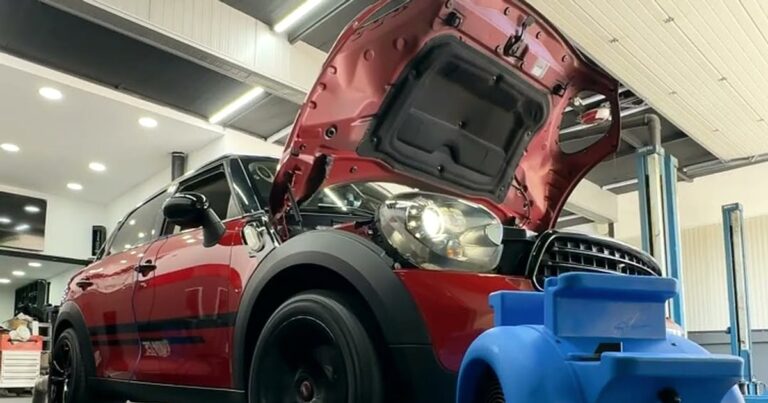
Stage 1 tuning: what your engine really gets
A stock engine doesn't run on one single, maximally aggressive map. The manufacturer has to balance power, fuel consumption, fuel quality in different markets, climate conditions, emissions regulations, durability and a wide range of component tolerances. Stage 1 tuning uses the room left within that factory reserve, but only when the calibration is adapted to the real condition of the specific vehicle.
It isn't a universal file that's just loaded into the ECU. A quality remap is a controlled change of engine management strategies: torque request, boost on turbo engines, fuel quantity, ignition timing on petrol engines and protective limits. The goal isn't the highest number on paper, but predictable response, a safe operating temperature and a result that can be measured and repeated.
What is Stage 1 tuning?
Stage 1 tuning is software optimisation of the ECU for a vehicle with stock hardware. In other words, it doesn't assume a larger turbo, a modified exhaust, sports camshafts or other mandatory mechanical changes. The tuning is done within the capabilities of the factory components, respecting their operating limits.
On turbo petrol and turbo diesel engines the potential is often more pronounced, because turbo operation and torque limits are directly controlled by software. Naturally aspirated engines can also get more precise response and better use of fuel, but expectations must be realistic: without forced induction there isn't the same room for a significant power increase.
Stage 1 isn't a standardised package with an identical result for every car. Two vehicles of the same model can behave differently because of mileage, fuel quality, the condition of the intake, turbo, injectors, spark plugs, clutch or transmission. That's exactly why serious calibration isn't separated from diagnostics.
Where is the difference really felt?
Owners often first notice the torque in the mid-range. The vehicle responds more confidently in in-gear acceleration, needs fewer gear changes when overtaking and feels more relaxed under load. On diesels this is mainly felt as earlier and fuller torque, while turbo petrol engines often get quicker and more linear throttle response.
Peak power is a useful reference, but it isn't the only important value. The power and torque curve says more about the vehicle's real character. A sudden torque jump can seem impressive in the short term, but it can stress the clutch, gearbox and drivetrain, and make traction harder to manage. A well-tuned map builds power progressively, in line with the capabilities of the engine and transmission.
Fuel consumption can stay similar or drop in relaxed driving if the driver uses the extra torque at lower load. However, tuning doesn't cancel the laws of physics. When the extra performance is used often, fuel consumption rises. A transparent approach always distinguishes the potential for more economical driving from a promise of permanently lower consumption.
The ECU isn't just a fuel map
A modern ECU continuously processes sensor data and corrects engine operation. Intake air temperature, coolant temperature, fuel pressure, knock on petrol engines, airflow and exhaust temperatures all affect the drivetrain's final behaviour. That's why Stage 1 tuning doesn't come down to raising turbo boost or injection quantity.
The calibration must keep functional protection strategies. If the temperature is too high, the fuel is of poorer quality or a parameter is outside the expected range, the ECU needs to be able to protect the engine. Removing protections for a more attractive result isn't a sign of expertise, but an unnecessary risk.
On automatic vehicles the relationship between ECU and TCU calibration is especially important. The engine can produce more torque than the factory gearbox logic expects. In some cases TCU tuning can improve torque limit management, clutch pressure inside the gearbox, shift speed and behaviour under load. Whether that's needed depends on the specific model, gearbox type and the vehicle's goal.
Before Stage 1 tuning: the vehicle's condition is decisive
Software doesn't fix a mechanical problem. A worn turbo, an intake leak, a weak high-pressure fuel system, a dirty sensor, faulty spark plugs or clutch slip can become more pronounced after the load is increased. A vehicle that shows faults, power interruptions or unusual smoke before a remap shouldn't be treated as ready for optimisation.
That's why diagnostics should include reading faults and reviewing relevant operating parameters. On turbo engines, requested and actual boost, fuel pressure, injection corrections where available, temperatures and deviations that might point to a problem are monitored, among other things. On petrol engines, data on ignition corrections and any knock is especially useful.
The service history also carries weight. Regular oil changes of the specified grade, healthy filters, quality fuel and a maintained cooling system aren't details. They determine how ready the vehicle is to reliably use the extra performance.
Why a dyno test gives a better basis than an estimate
Figures without measurement conditions are easily misleading. Power can differ depending on temperature, correction standard, type of dyno, tyres, gear and how the vehicle is strapped down. That's why the result should be read as part of a complete process, not as an isolated marketing claim.
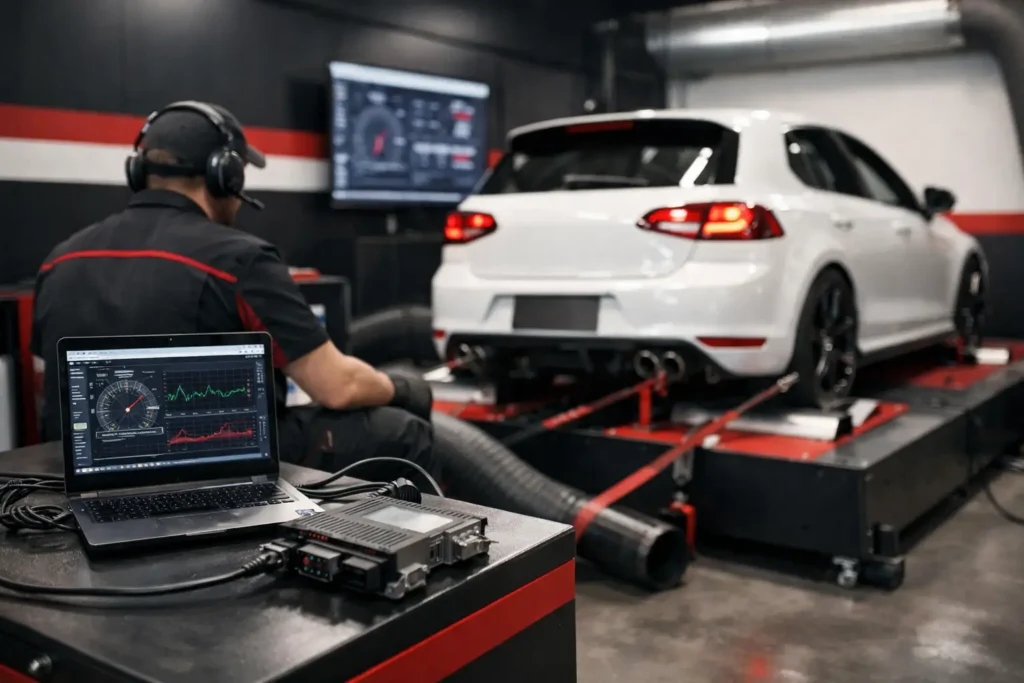
Measuring before and after calibration on the same dyno, in comparable conditions, gives far more useful insight. It shows not only peak power, but also the shape of the curves, torque development and any deviations at full load. For AWD vehicles, measurements on suitable all-wheel-drive equipment are especially valuable, as they simulate the operation of the complete drivetrain.
ASF Motorsport uses diagnostics and dyno validation as part of an engineering approach to calibration. This allows decisions to be based on logged parameters and the behaviour of the specific vehicle, instead of assuming every example of the same model responds the same way.
When isn't Stage 1 the right next step?
If the priority is long trips at full load, towing a trailer, fleet working reliability or maximum economy, the map must be adapted to that purpose. An aggressive setup that suits a weekend car isn't automatically a good choice for a delivery van, tractor or truck working under load every day.
Also, a vehicle with existing problems should be repaired first. Sometimes the best decision is to restore full stock performance through proper servicing, cleaning the intake system, fixing a sensor fault or renewing a part that isn't working properly. Tuning makes sense when the foundation is healthy.
Legal and homologation obligations differ by country and vehicle use. The owner should check how changes affect roadworthiness inspection, insurance, warranty and local regulations. Professional optimisation doesn't mean ignoring the obligations that come with using a vehicle on public roads.
How to recognise a responsible approach to a remap
A responsible tuner asks questions before suggesting a map: what condition the vehicle is in, what fuel is used, whether the transmission is stock, how the vehicle is driven and what the owner really wants to improve. It's just as important that they explain the limits, not just the potential.
Ask for a clear process: a condition check, reading the original software, a calibration for the specific ECU, parameter validation and the option to return to the original file when technically relevant. In quality work there's no room for hidden changes, switching off protections without reason or universal claims of the same gain for every vehicle.
Stage 1 tuning is most successful when the driver feels the engine runs more naturally, not just more aggressively. When power builds cleanly, the transmission stays aligned and measurements confirm the parameters are under control, you achieve what lies behind the Where Speed Meets Precision approach: performance based on precision, not assumptions.