File service for precise ECU and TCU calibration
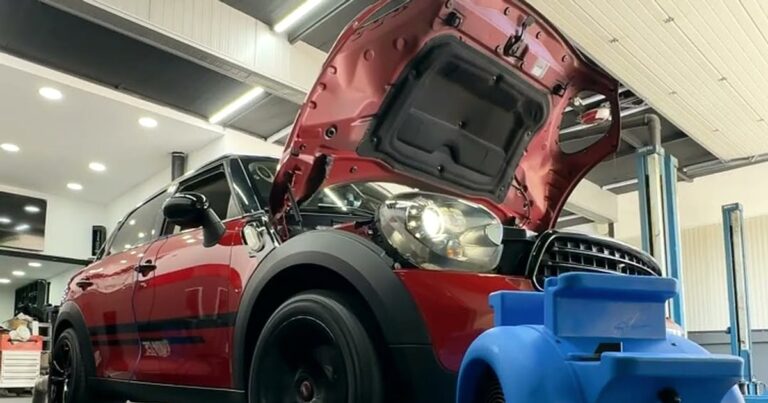
When a vehicle arrives at the workshop with a clearly defined goal – better response, more torque in the useful range or better automatic gearbox behaviour – a file service isn't just sending the original software and waiting for a modified file. It's a technical process in which the exact control unit is identified, the vehicle's condition is checked and a calibration is built that must make sense for the specific engine, drivetrain and purpose of the vehicle.
For a professional workshop, the quality of the file service directly affects its reputation. The customer may see the result through driving, but the workshop must understand what was changed, why it was changed and when a vehicle isn't a good candidate for a remap. That's exactly the difference between a simple file edit and responsible calibration support.
What does a file service really include?
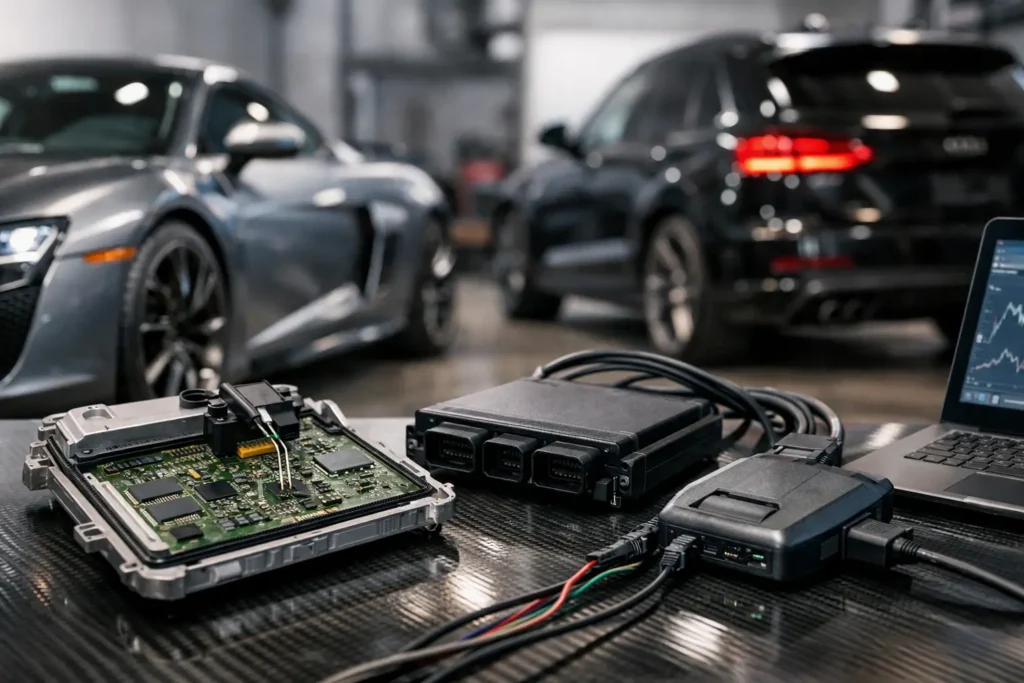
A file service is professional processing of the original ECU or TCU file. The workshop reads the software from the control unit using the appropriate method – via the diagnostic port, on the bench or by direct access to the module when technically necessary. The original file is then analysed according to the hardware and software version, checksums and relevant calibration maps.
A good process doesn't start with how much power the customer wants. It starts with questions about the vehicle: are there active or stored faults, what are the actual boost and fuel parameters, is the transmission working properly, what's the maintenance history and have mechanical changes already been made? A stock engine with healthy systems has a different starting point from a vehicle with hardware already fitted or one already showing deviations in diagnostics.
In ECU calibration, the most common corrections are to torque maps, driver demand, per-gear limits, boost, fuel, ignition and protection strategies, depending on the engine and control system. In TCU calibration the focus may be on transmitted torque limits, clutch pressures, shift logic, shift speed and behaviour in different driving modes. None of these changes should be a generic assumption.
Why the original file determines the quality of the result
The original file is the technical starting point of any reliable work. It shows the actual software version in the vehicle, not just the general engine or model name. Two vehicles of the same year and similar specification can have different ECU strategies, different protections or calibration versions that require a completely different approach.
That's why a quality file service doesn't rely on universal files. The calibration must match exactly the software that was read. If the compatibility check is skipped, the risk isn't just a weaker result. Faults, incorrect torque management, mismatched ECU and TCU requests or programming problems can occur.
A backup is just as important. The original should be kept properly labelled, together with the basic vehicle data and the work done. This lets the workshop return to the starting state when further diagnostic work, an update or a different configuration is needed. In a professional process, traceability isn't an administrative detail but part of technical safety.
The ECU and TCU must work as one system
On modern vehicles, the engine and gearbox constantly exchange information. The ECU calculates and reports available torque, while the TCU uses that figure to manage the clutches, pressures and shift strategy. When only the engine calibration is changed without understanding the transmission's limits, the result can be an uneven driving feel or protective interventions being triggered.
That doesn't mean every vehicle needs TCU calibration. In some configurations the stock transmission and its calibration suit the target ECU optimisation perfectly well. In others, especially when available torque is increased or more precise gearbox behaviour is wanted, analysing the TCU strategy is justified. The decision depends on the specific unit, gearbox condition and how the vehicle is used.
Diagnostics before the file, measurement after the work
The best calibration can't fix a mechanical problem. Worn spark plugs, weak fuel supply, an intake leak, a clogged filter, turbo irregularities, a clutch problem or sensor faults can change how the engine responds. If such problems are ignored, a software change only makes proper diagnosis harder.
Before programming, faults should be read and the available operating parameters reviewed. For a turbocharged engine, actual and requested boost, intake temperature, fuel corrections, fuel pressure and torque deviations are relevant, among other things. In diesel, petrol, motorcycle and industrial applications the priorities differ, but the principle stays the same: the calibration must be based on the system's confirmed condition.
After programming, a test drive and data logs confirm that the vehicle follows the requested values without unwanted deviations. A dyno test adds value because it allows repeatable power and torque measurements in controlled conditions. It isn't just for the number on the report. The curves show where the engine has gained, whether torque delivery is linear and whether the vehicle's behaviour under load matches the planned calibration.
ASF Motorsport bases this approach on measurement, diagnostics and calibration tailored to the specific vehicle. That's the essence of the Where Speed Meets Precision philosophy: performance only has value when it's controlled and technically verifiable.
How a professional workshop organises its file service
Speed of response matters, but it shouldn't replace the quality of the input data. Before sending a file, the workshop should prepare a complete description: model and year, engine and gearbox, ECU number or tool identification, read type, list of diagnostic faults, existing hardware changes and the customer's precise goal. The clearer the request, the smaller the chance of a wrong assumption.
An everyday vehicle, a work machine, a transport vehicle, a track bike and a boat should be clearly distinguished. With vans and trucks, usable torque in the working range and predictable behaviour under load are often the priority. With agricultural machinery, stable operation and alignment with the real duty cycle matter. With a motorcycle, ATV, UTV or PWC, throttle response and power delivery may matter more than the peak value at the top of the rev range.
The workshop must also know when to stop. If the data points to a fault, if the software version is unusual, if the vehicle has had unknown previous work or if the customer is asking for a solution that isn't technically justified, the cause is addressed first. A transparent explanation of limits builds more trust than promises without measurement.
Support after programming is part of the service
After the file is written, the job isn't finished just because programming succeeded. You need to confirm that the vehicle starts, that there are no new faults, that communication with the modules works correctly and that actual parameters under load behave as expected. With TCU work, shift quality, part-throttle behaviour and the response to a stronger torque request are also checked.
Sometimes corrections are needed after the first log or measurement. That isn't a sign of a weak process, but a normal part of the work when the calibration is adapted to the vehicle's real behaviour. The difference is whether the correction is made based on data or blindly.
A file service is a partnership, not just a file
A workshop using a file service takes on responsibility towards its customer, while the calibration partner takes responsibility for the technical logic of the changes. The best result comes when both sides exchange complete information and don't skip diagnostics to save time.
For the vehicle owner, this means a more predictable result. For the workshop, it means less repeated work, clearer records and more confidence on every next project. A precisely read original, a realistically set goal, a checked vehicle condition and measurement after the work are always a better basis than a quick file without context.
If a vehicle has a specific task, the calibration should follow that task. It's in exactly that discipline – when the speed of the process is combined with the precision of technical data – that a file service becomes a real professional advantage.